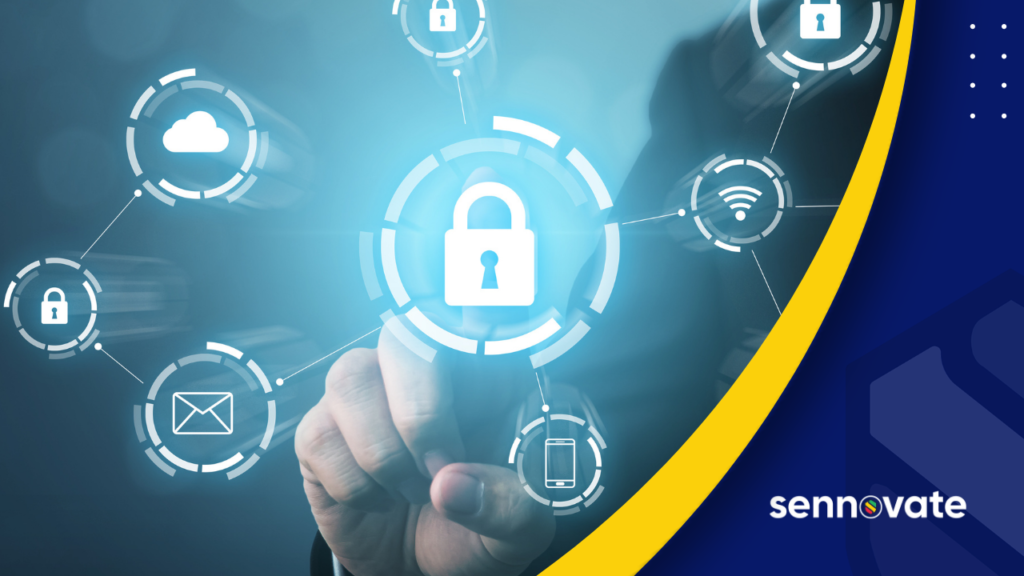
Cybersecurity Ventures expects global cybercrime costs to grow by 15 percent per year over the next five years, reaching USD 10.5 trillion annually by 2025, up from USD 3 trillion in 2015. To reduce the risk of cyber-attacks as well as to secure business, Privileged Access Management (PAM) solutions are important.
Data breaches are mainly always the result of compromised endpoints as well as privileged credentials. Because of which monitoring and protection of privileged accounts have become crucial. To fully protect sensitive data, it is necessary that solutions need to be in place so that they secure both endpoints and privileged credentials. To make the enterprises rightly monitor and protect the entire network and provide insight into which users have access to what data, implementing a PAM system can help.
But What is PAM? What does a typical PAM help solve? What does a PAM solution offer for the cybersecurity of a company? When and Why you should choose a PAM? What are the popular PAM solutions available in the market? Also, How do Sennovate’s PAM services help you? Ugh! So many questions? No worries! This guide is all about Privileged Access Management (PAM). At the end of this guide, you will get the answer to all your questions.
So, let’s get started!
What Is PAM?
Privileged Access Management (PAM) is the mixture of tools as well as technology that are used to secure, control, and monitor access to an enterprise’s sensitive information and resources. Shared access password management, privileged session management, vendor privileged access management (VPAM), as well as application access management, are the various subcategories of PAM. To provide security to the user accounts as well as manage the accounts having privileges to pre-eminent resources of the organizations, Privileged Access Management (PAM) solutions are implemented. A procedure that uses technology to supervise, manage, and secure privileged accounts are called Privileged Access Management. A few of the examples of “Privileged accounts” are mentioned under:- HR, Finance, and business privileged accounts.
- Local Administrator accounts
- Emergency accounts that have the right to shut down systems during the time of emergency
- The organization’s official social media handler
- Root user accounts and a few others to list
What Does A PAM Solution Offer For The Cybersecurity Of A Company?
Privileged Access Management (PAM) is fabricated of the cybersecurity strategies and technologies for exercising control over the privileged access and permissions for users, accounts, processes, and systems across an IT environment. Privileged Access Management (PAM) helps enterprises to curtail their enterprise’s attack surface, and ward off, or at least reduce, the damage arising from outside attacks as well as from insider misconduct or negligence by dialing in the proper level of privileged access controls.What Are The Reasons To Choose PAM Solution?
PAM solution helps organizations simplify the changing IT infrastructure by providing them the useful tools they need to stop, cancel, and monitor access. PAM is made up of three important modules including an access manager, a session manager, and a password manager. All three modules work together to provide you with the PAM benefits you need to keep your organization protected.Access Management
Access management empowers executives to see exactly who is accessing systems and data so they can detect the danger and prevent threats. It anticipates all users with a centralized solution using a single HTTPS access point to diminish the potential attack surface area and access all the systems and data they require. Benefits:- From a central location, manage and secure all access
- Quick deployment with less operational interruption
- Modify the existing security solutions allowing you to leverage all the capabilities
- Using optical character recognition (OCR) technology throughout your Bastions supports advanced research and search
- Meet up with compliance regulations easily
Session Management
Session management empowers executives to control access to the system in real-time. You can integrate it into your other security tools, for instance, security information and event management (SIEM) systems, security automation and orchestration (SAO) solutions, and intrusion detection systems (IDS) to recognize and stop attacks as and whenever occur. To simplify compliance, it also includes an immutable audit trail. When any cautious activity occurs or when privileged users perform unauthorized actions it alerts the executive. The sessions can then either be manually discontinued by the executive or the session manager can do it automatically. Benefits:- With human control, upgrade incident response with the help of automatic response and mitigation
- Monitor, audit, and completely control privileges
- Stop the insider attacks, privileged account escalation, and third-party access issues
- Easily prove regulatory compliance
Password Manager
The Password Manager makes sure that all the passwords are encrypted in a secure vault. Also, it supports the implementation of password best practices. By the sharing, escalation, or misuse of privileged credentials, one of the biggest insider risks arises. To battle the problem, ensuring password security is the best as well as suitable way. A password manager removes the direct access to critical systems, significantly diminishes the potential attack footprint. Executives have full control and they can easily automate the management and cycling of passwords. They can also track all the credentials. Apart from this, even as your password manager integrates with other systems, the certification of passwords is ensured. Benefits:- Enhance security
- Diminish risk exposure
- Review alerts in real-time
Popular PAM Solutions Available In The Market
There are various PAM solutions available in the market. But the most effective and best solutions are:BeyondTrust
BeyondTrust is the leader in Privileged Access Management (PAM) all over the globe. It renders the flawless and most lifelike approach to preventing data breaches concerned with stolen credentials, misused privileges, and compromised remote access. It is one of the best servers that allow enterprises to easily scale privilege security as breaches evolve across endpoint, server, cloud, DevOps, and network device environments. BeyondTrust combines the industry’s wide range of privileged access proficiencies altogether. It includes centralized management, reporting, and analytics. It allows headmen to take major and better decisions to defeat attackers. BeyondTrust integrated platform is well-known and famous for its flexible design. It improves user productivity, simplifies integrations, as well as increases IT and security investments. BeyondTrust provides enterprises with visibility and control. It helps them to bring down risk, gain compliance goals, and improve operational performance. Click here to know more.CyberArk
CyberArk is a company that provides PAM, and security solutions. You can stop and omit privilege attacks with CyberArk before they can harm you. You will concentrate on your core business without having any stress in mind knowing that your critical assets are safe. Also, your users get native access to everything they need. CyberArk Access Management strengthens your organization’s security needs. CyberArk solutions enable businesses to reduce security risk in less time, safeguard their brand reputation and help satisfy security and regulatory objectives with fewer internal resources. Click here to know more.Remediant
Remediant is the great PAM solution. It is agent-less, vault-less, and never shared which means it is a lower-cost security solution that is easier to implement, while still protecting access to servers and endpoints. Remediant specializes in identifying legitimate accounts that are acting as a threat as well as makes it very easy to remove or suspend the dangerous accounts. Also, in cybersecurity innovation, Remediant is the leader that offers best-in-class solutions for real-time monitoring, zero-trust privileged account protection, and Just-In-Time Administration (JITA) across the IT sector. Click here to know more.Centrify
Centrify is redefining the legacy approach to Privileged Access Management (PAM) with cloud-ready Zero Trust Privilege to secure modern enterprises and stop the leading cause of breaches – privileged access abuse. With this you’re empowering your most critical business initiatives and use cases, securing an ever-expanding attack surface, and assisting your internal stakeholders to tackle their specific industry challenges. With Centrify PAM you can grant the least privilege access based on verifying who is requesting access, the context of the request, and the risk of the access environment. Click here to know more.Pricing Of Sennovate’s PAM Service
At Sennovate, we offer PAM Services at the best in class industry pricing. You can also calculate the pricing according to your necessity and requirements. Click here to calculate!Summing Up
Hope this guide helps you to understand what PAM is and how it will help your organization. If you want to prevent your organization from any cyber attacks, you should give PAM solutions a try! We at Sennovate, implement the world’s best cybersecurity solutions that save your organization’s time and money. We have PAM global partners around the world. Have any queries or want to have a call with us to know more about PAM Solutions? Contact us right now by clicking here. Sennovate’s PAM Experts will explain everything and solve all your queries. You can also write a mail to us at [email protected] or call us on (925) 918-6618.Related Articles

Top 10 Vulnerability Management Tools for 2026: Prioritization, Remediation, and Cost
Discovered vulnerabilities have outpaced the ability of human security teams to remediate by 2026. The...