In 2026, zero trust identity management has become the foundation of enterprise cybersecurity because the traditional network perimeter no longer protects modern organizations. Identity now serves as the control plane. However, passwords and legacy multi-factor authentication (MFA) remain vulnerable to social engineering, MFA fatigue attacks, and real-time phishing.
Therefore, technology leaders should respond to this systemic risk by adopting the FIDO2 standard. Transitioning to a passwordless authentication architecture is no longer a futuristic concept; it is a critical operational imperative. For CTOs, CIOs, and CISOs, this shift is the cornerstone of effective Sennovate identity security services, directly reducing operational expenditure (OpEx), mitigating catastrophic breach risks, and streamlining the user experience without compromising security.
Why Zero Trust Identity Management Requires Stronger Authentication
The continued reliance on passwords and knowledge-based MFA (such as SMS codes or push notifications) introduces unacceptable business risks and hidden costs:
- The MFA Fatigue Vulnerability: Threat actors increasingly bombard users with push notifications until exhaustion leads to accidental approval. Legacy MFA cannot inherently distinguish between a legitimate user and a coerced one.
- Unsustainable Helpdesk OpEx: Industry data consistently shows that 20% to 50% of all IT helpdesk tickets are related to password resets. This represents a massive, recurring drain on operational resources.
- Elevated Mean Time to Remediate (MTTR): When a password is compromised, the window of exposure is significant. Revoking access, forcing resets, and auditing lateral movement consumes critical time, during which data exfiltration can occur.
- Regulatory and Compliance Pressure: Emerging frameworks and industry mandates are increasingly deprecating SMS and email-based MFA, requiring cryptographic, phishing-resistant alternatives for accessing sensitive data.
Understanding the Mechanics of Phishing-Resistant MFA
To govern this transition effectively, technology leaders must understand why FIDO2 (Fast Identity Online) is fundamentally different from legacy authentication.
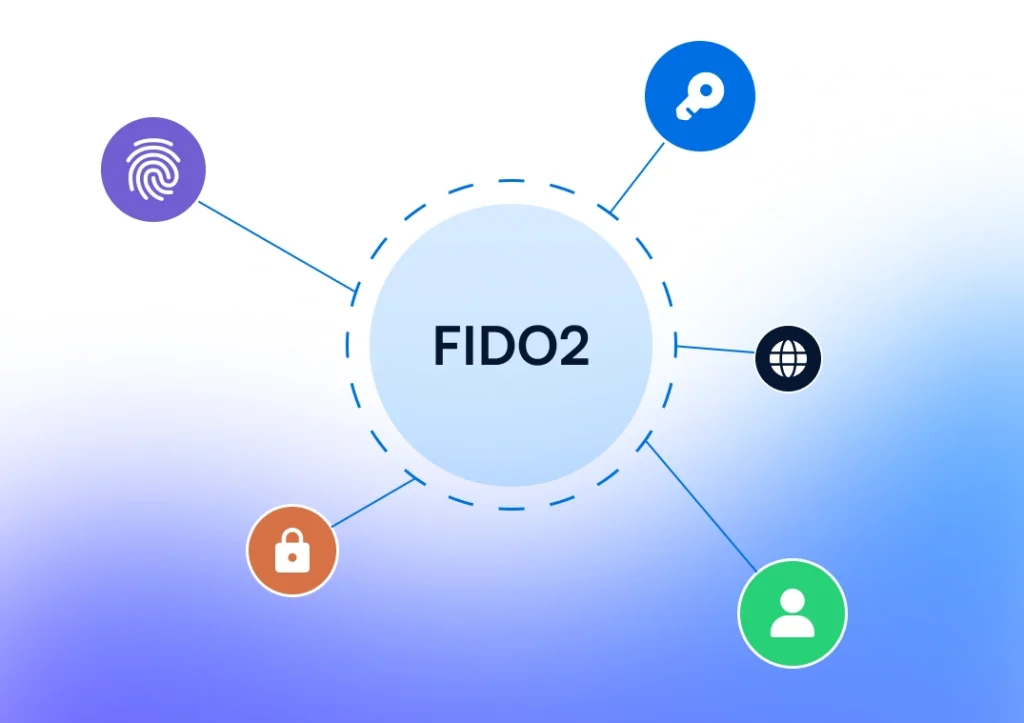
FIDO2, which encompasses the WebAuthn standard, utilizes public-key cryptography. During enrollment, the authenticator generates a unique cryptographic key pair. It keeps the private key securely on the user’s device, such as a hardware security key, smartphone, or platform TPM. Meanwhile, the enterprise Identity Provider (IdP) registers the public key.
The defining feature of phishing resistant MFA is origin binding. During authentication, the browser cryptographically binds the challenge to the specific domain (for example, login.enterprise.com). If an attacker tricks a user into visiting a fraudulent site (login-enterprise.com), the browser will refuse to sign the challenge because the domains do not match. This renders real-time phishing and man-in-the-middle (MitM) attacks mathematically ineffective.
Designing a Passwordless Authentication Architecture
Transitioning an enterprise to passwordless authentication requires a structured, risk-managed architectural approach. Therefore, avoid a “big bang” deployment and follow a phased methodology:
1. Infrastructure Assessment and IdP Alignment
Evaluate your current Identity Provider (e.g., Microsoft Entra ID, Okta, Ping Identity) to ensure native support for FIDO2/WebAuthn. Moreover, most modern enterprise IdPs support this natively. As a result, teams can avoid third-party middleware and reduce Total Cost of Ownership (TCO).
2. Phased Rollout Strategy
- Phase 1: IT and Security Teams: Deploy FIDO2 hardware security keys (e.g., YubiKeys) to high-value targets first. This secures the administrators who manage the rest of the environment.
- Phase 2: High-Risk Business Units: Extend deployment to finance, HR, and R&D teams, utilizing a mix of hardware keys and platform authenticators (Windows Hello, Touch ID).
- Phase 3: Enterprise-Wide Deployment: Roll out passkeys and platform authenticators to the broader workforce, leveraging mobile device management (MDM) to streamline provisioning.
3. Establishing Resilient Fallback Mechanisms
A robust passwordless authentication architecture must account for edge cases (e.g., a lost hardware key or a broken mobile device). Implement secure, out-of-band fallback methods, such as temporary, time-bound access codes issued via a secondary, verified channel, or manager-approved emergency access protocols. Consequently, the workforce stays productive while IT meets its Service Level Agreement (SLA).
Multi Factor Authentication Best Practices in a Zero Trust Identity Management Framework
Implementing FIDO2 is not a “set it and forget it” initiative. It must be integrated into a broader zero trust identity management strategy. Adhering to multi factor authentication best practices in 2026 involves:
- Continuous, Adaptive Authentication: First, authentication does not end at the login screen. Integrate FIDO2 with continuous risk assessment engines that evaluate device posture, geolocation, and behavioral biometrics throughout the session. If risk spikes, the risk engine can trigger step-up authentication.
- Eliminating Shared Accounts: Passwordless architectures make shared accounts (e.g., [email protected]) obsolete and highly visible. Enforce strict individual accountability by tying every cryptographic key to a specific, verified human identity.
- Centralized Lifecycle Management: Ensure that the offboarding process instantly revokes the public key registration in the IdP. In contrast, passwords can change and users can reuse them. Revoking a FIDO2 credential permanently removes that device’s access and improves MTTR during an incident.
Measuring Zero Trust Identity Management Success
Therefore, CISOs should track metrics that demonstrate tangible business value and justify the passwordless investment to the board and CFO:
- Total Cost of Ownership (TCO) Reduction: Measure the elimination of costs associated with password reset helpdesk tickets, legacy MFA token procurement, and third-party authentication plugins.
- Operational Expenditure (OpEx) Savings: Track the reduction in onboarding time for new employees and contractors. Passwordless provisioning via MDM can reduce Day-1 access setup time by up to 70%.
- Mean Time to Remediate (MTTR): Quantify how quickly security teams can neutralize access from a compromised device. With FIDO2, revoking a single public key registration instantly invalidates access across all federated applications.
- Security Posture Index: Track the percentage of the workforce successfully migrated to phishing-resistant authentication methods, aiming for a target of >95% within 18 months of program initiation.
Strategic Recommendations for Technology Leaders
- Update Enterprise Authentication Policies: Formally deprecate SMS and email-based MFA in corporate security policies. Mandate FIDO2-compliant, phishing-resistant methods for all access to sensitive data and administrative consoles.
- Leverage Existing Investments: Before procuring new solutions, audit your current IdP and endpoint management tools (e.g., Intune, Jamf). Most organizations already possess the necessary licenses to deploy platform authenticators (Windows Hello, Apple Touch ID) at no additional cost.
- Prioritize User Experience (UX) in Rollout: Frame the transition to passwordless not as a security restriction, but as a productivity enhancement. Users consistently report higher satisfaction when they no longer need to remember complex passwords or wait for SMS codes.
- Integrate with Device Trust: Combine zero trust identity management with device trust. Therefore, provision FIDO2 credentials only to corporate-managed, compliant devices. This adds a critical layer of hardware-bound security.
Zero Trust Identity Management: Key Takeaways
Ultimately, the transition to FIDO2 goes beyond a technology upgrade; it realigns the enterprise security posture. By adopting a passwordless authentication architecture, organizations can decisively neutralize the most prevalent attack vector in modern cybersecurity: credential theft.
When executed with a phased, risk-managed approach and governed by rigorous multi factor authentication best practices, this shift delivers a rare dual outcome: it dramatically enhances security through phishing resistant MFA, while simultaneously reducing OpEx and friction for the end user. In a mature zero trust identity management ecosystem, the password is no longer a necessary evil; it is an obsolete liability that forward-thinking enterprises are leaving behind.
Related Articles
Just-in-Time Provisioning: How Temporary Access Reduces Identity Risk
An engineer receives administrator access to fix a production issue. The repair takes 30 minutes....